Traceability, Family Succession, and the Sustainability of Supply Chains
There is knowledge that has never been written down. It wasn’t born in manuals, wasn’t organized into operating procedures, and could hardly be learned just by watching a video. It was passed down in kitchens, backyards, workshops, farm fields, rivers, forests, and small production units.
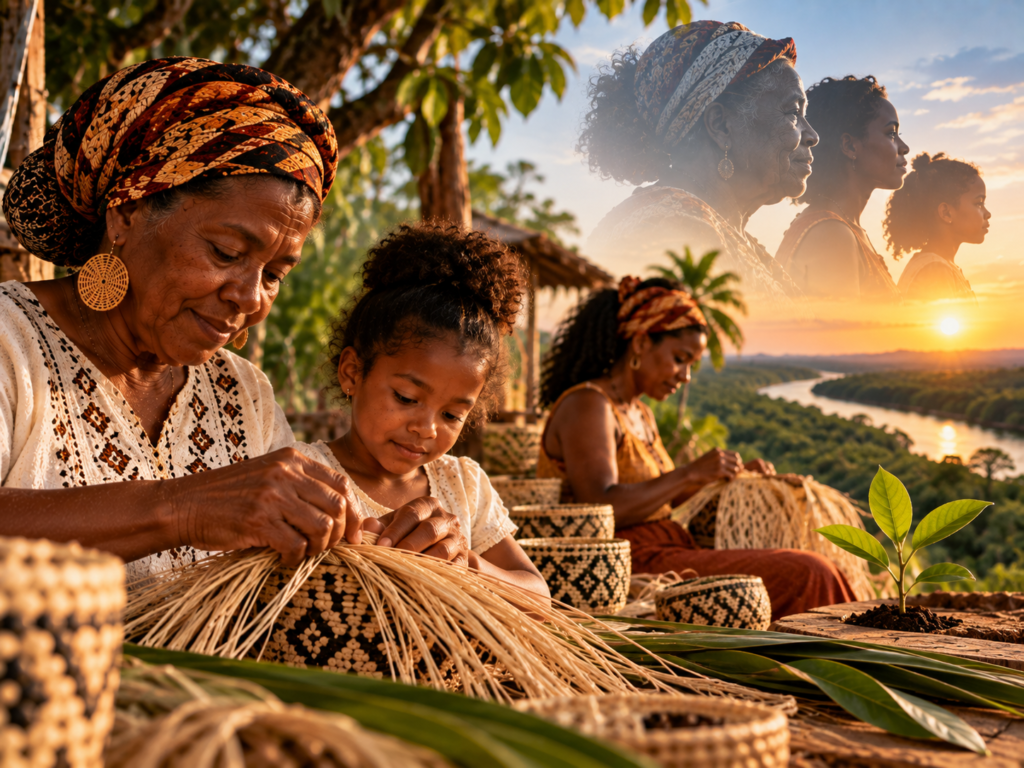
These skills were passed from one person to another through observation, repetition, shared experiences, and the passage of time. A child watched his grandmother select a strand of fiber, and years later, learned to recognize by touch what no one had ever fully explained in words. A son accompanied his father during the harvest and learned to read signs from the land that weren’t written in any calendar.
A craftsperson spent years observing another woman’s hands until she understood the correct tension of a thread, the weave of a stitch, or the moment when a raw material was ready to be transformed. This is how a significant part of a society’s productive heritage is passed down through generations: not merely as information, but as living experience.
When we talk about family succession, we often imagine the transfer of an economic activity from parents to children. In many artisanal, agricultural, extractive, and traditional industries, however, what is being passed down is much more than just a line of work. There is knowledge about raw materials, the local area, climate, tools, techniques, production timelines, organizational structures, and problem-solving methods that are rarely found in a product’s technical specifications.
There is knowledge that has been built up and refined over decades and that literally resides within people. When a generation leaves a particular activity behind without being able to pass on what it knows, the loss is not limited to a reduction in the number of producers. A part of that supply chain’s productive memory may disappear along with it.
Some craft traditions do not end because the raw material has run out, because the market has disappeared, or because a factory has closed. They fade away quietly. First, the number of people who know how to produce them dwindles. Then a particular technique begins to become rare. A raw material falls out of use because few people still know how to gather, prepare, or process it. A workshop closes. A family switches to a different line of work. A child chooses a different profession.
A granddaughter goes to study in another city and finds new opportunities there. Little by little, what for decades seemed to be a permanent part of a region’s economic and cultural landscape begins to disappear. By the time we finally realize it, we may have lost more than just a supplier. We may have lost knowledge, productive capacity, memory, local income, and a network of relationships that cannot be rebuilt simply by buying a new machine or finding another service provider.
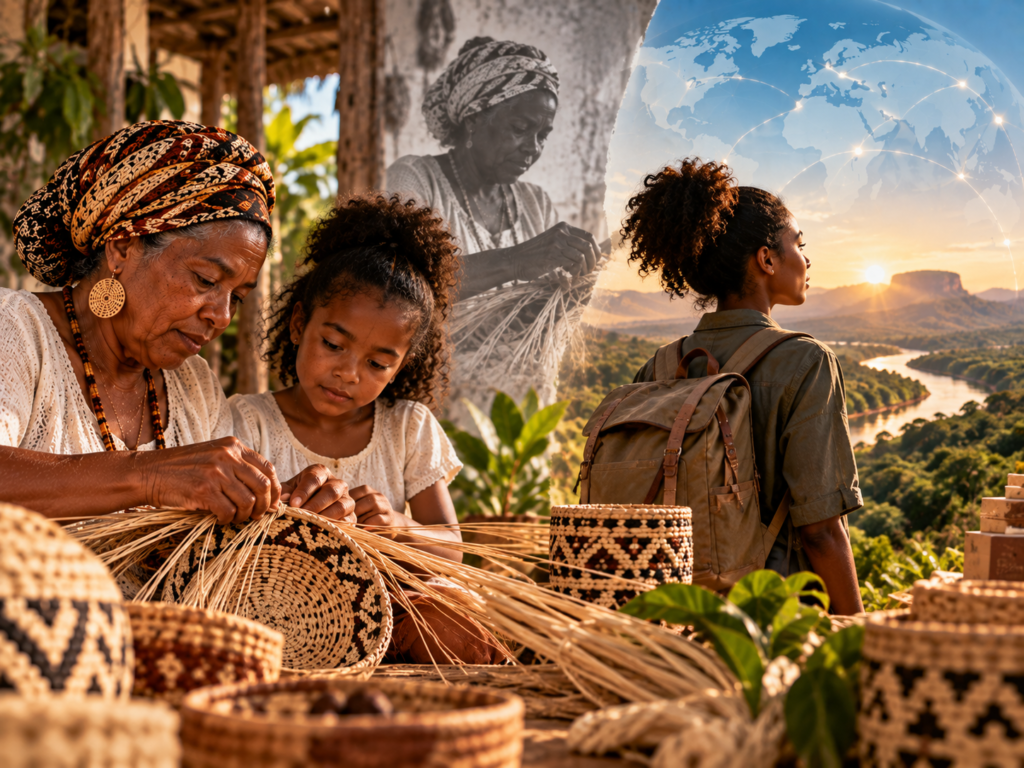
This perspective broadens the very concept of sustainability. When we say the word “sustainability,” we immediately think of carbon, biodiversity, water, energy, waste, deforestation, materials, working conditions, and emissions throughout the supply chain. All of these issues are fundamental. But there is a less visible dimension: the sustainability of the human continuity of production.
A supply chain can reduce environmental impacts, improve its materials, and meet a range of social and environmental requirements, yet still face structural vulnerability if the people who possess essential knowledge are aging without new generations having the interest or means to remain in the field. In this case, environmental sustainability is being built at the very same time that the human capacity that sustains that production may be disappearing.
The question “Who will continue to produce?” should, therefore, be given greater consideration when we discuss the resilience of supply chains. In family- and community-based supply chains, a significant portion of the knowledge is not concentrated in corporate systems, patents, or databases. It is distributed among people.
They are the ones who know how to identify materials, interpret nature’s signals, adjust processes, assess quality, and respond to situations that no specification can fully anticipate. When this knowledge is concentrated in the hands of just a few people and isn’t passed on, the supply chain faces a risk that may remain hidden for many years. The product continues to reach the market, orders continue to be fulfilled, and apparently nothing has changed—until the moment that expertise is no longer available.
But talking about succession requires letting go of a comfortable—and often romanticized—idea: that children and grandchildren should continue certain activities simply because their parents and grandparents did them. No one is obligated to preserve a production chain just because they were born into it. New generations have their own plans, desires, opportunities, and the right to choose different paths.
When young people leave a family business, that decision is sometimes interpreted as a lack of interest in the culture, the region, or tradition. The reality may be much more practical. Insufficient income, low predictability, heavy labor, little recognition, difficulty accessing markets, a lack of technology, limited prospects for growth, and better opportunities in other sectors all weigh on these decisions. Leaving may not represent a rejection of one’s roots. It may simply represent the search for a future.
That is why succession is also an economic issue. It is not enough to simply tell a new generation that a certain technique needs to be preserved. We must ask whether the conditions exist for someone to want to build a life around it. What income does this activity provide? Is there access to a market? Is there professional recognition?
Does the producer have the ability to negotiate, or does he simply accept the price set by other players in the chain? Are there opportunities to innovate, conduct research, adopt technology, develop new products, and reach new buyers? A tradition remains truly alive only when it engages with the present. Preservation cannot mean condemning people to endlessly reproduce the same economic conditions of the past.
It is precisely at this point that the discussion of perceived value intersects with the discussion of succession. When a handmade or locally produced product enters the market completely detached from its origin, it tends to be evaluated based on the attributes that remain visible: appearance, size, material, functionality, and price.
Two items may appear similar on a screen, even though one of them represents hours of manual labor, knowledge passed down through generations, raw materials tied to a specific region, and a local production network. If none of these differences are reflected in the product, the market simply lacks sufficient information to recognize them. The supply chain that embodies the most knowledge may end up competing as if it were producing just another object.
Traceability can play a role precisely in this gap between what exists and what the market is able to perceive. It does not create knowledge, does not replace tradition, and does not guarantee economic value. But it can build an infrastructure to ensure that authorship, territory, materials, techniques, processes, and evidence remain connected to the product.
A digital identity can record who produced something, where a particular stage took place, what materials were used, which organizations were involved, and what documents or evidence support specific information. In chains where knowledge is passed down through generations, this structure can also capture a dimension that has been little explored: continuity.
Imagine a piece associated not only with the name of a craftsperson, but with the history of production of which she is a part. She learned a particular technique from her mother, who had learned it from another generation. Over time, the family adapted materials, incorporated new tools, created designs, changed marketing strategies, and reached markets that her ancestors might never have imagined. Documenting this journey does not mean turning genealogy into a sales pitch or reducing culture to a sequence of fields in a database. It means recognizing that there is a history of production embedded within that object and that this history also constitutes part of its identity.
This possibility, however, comes with an important responsibility. Not all knowledge should be digitized, and not all information should be made public. Traditional knowledge may have its own rules for transmission, cultural significance, community value, or commercial sensitivity.
Information about territories and natural resources may also require protection. Recording such information without consent can turn a tool designed to enhance knowledge into a mechanism of appropriation. A responsible infrastructure must enable governance: who can record, who can validate, who can access the information, which information is public, and which remains restricted. The community, the family, the producer, or the responsible organization must be involved in these decisions. Preserving a history does not mean taking away from its protagonists the right to decide how it will be told.
We must also prevent traceability from freezing cultures in time. There is a broader tendency to value the “traditional” only when it corresponds to an idealized image of the past. As if using a new tool, modifying a pattern, studying design, selling online, or accessing international markets diminished the authenticity of those who produce. But living knowledge changes. It has always changed.
Children can carry on their parents’ work by doing it in a different way. A young woman can learn her grandmother’s techniques and use digital tools to market her products. A craftsman can maintain his mastery of a particular raw material and develop contemporary designs. A cooperative can incorporate management, technology, and business acumen without losing its connection to the local community. Continuity does not mean stagnation.
In fact, perhaps the opportunity to innovate is precisely one of the conditions that will make new generations want to stay. A young person who sees that line of work as nothing but repetition, low pay, and commercial isolation will likely have little incentive to continue.
But that perception can change when he sees the possibility of starting a business, creating, studying, accessing technology, engaging with other markets, and building his own professional identity without breaking with what he has inherited from previous generations. Succession, then, ceases to be an obligation to preserve the past and becomes an opportunity to reinterpret it.
This is where traceability can go beyond its role as a record-keeping tool and begin to generate supply-chain intelligence. An organization that knows who is involved in its production can ask: How many families are involved? In which regions? Which age groups are represented? Which techniques are concentrated among just a few people? Are young people learning the trade? Does a particular raw material depend on knowledge held by producers who are nearing retirement? Are there products whose continued existence is tied to a single family? These questions transform family succession into an observable dimension of productive resilience.
Imagine a company that appears to be doing well commercially. Sales are growing, buyers are showing interest, and new markets are beginning to emerge. However, upon analyzing the production process, it becomes clear that a key stage depends on four people, all from the same generation, and that no one younger has a complete grasp of the process.
From a business perspective, that supply chain appears strong. From a continuity perspective, however, it harbors a hidden vulnerability. Without visibility, the problem will likely only become apparent once production capacity begins to decline. With the right information, there is at least a chance to address the issue proactively.
This insight can be relevant to cooperatives, associations, companies, development organizations, and public policy. Identifying areas where knowledge is becoming scarce can guide programs focused on capacity building, youth training, design, innovation, market access, or strengthening production.
Understanding which activities face succession challenges can reveal that the problem lies not in a lack of cultural interest, but in low economic appeal. Knowing where products are being sold can also allow market information to flow back to those at the source, helping producers better understand demand, trends, and opportunities.
This feedback is essential. Digitizing a supply chain without democratizing some of the intelligence it generates may simply reproduce old asymmetries within a new technological infrastructure. If artisans, farmers, and small-scale producers continuously provide data, but all useful information remains concentrated in the organizations closest to the market, the supply chain has become digital without necessarily becoming more balanced.
Valuing knowledge also means considering how information and opportunities can flow back. Where are the products reaching? Which markets are showing interest? Which attributes are being valued? Which documents are beginning to be requested? What skills can open up new business opportunities? Information can also be a tool for autonomy.
There is, in this debate, a dimension of dignity that cannot be ignored. Preserving a supply chain should not mean keeping people in precarious economic conditions so that the rest of the market can continue to have access to products considered authentic. Sustainability cannot require that communities remain poor in order to continue appearing traditional. Nor should we turn vulnerability into a commercial aesthetic.
A craftsperson does not need to be portrayed as an exotic figure for her craft to be valued. A traditional producer is also a professional. A cooperative is an economic organization. Ancestral knowledge is still knowledge. If a particular body of knowledge has cultural and commercial value, the discussion about its preservation must address how part of that value reaches the people responsible for keeping it alive.
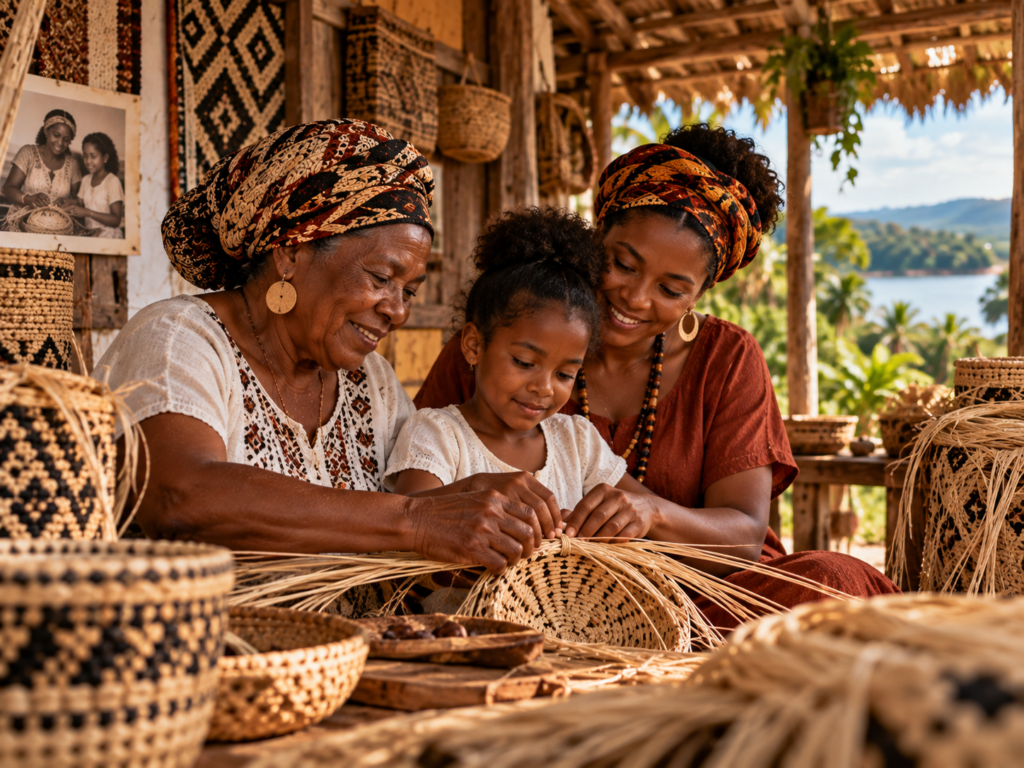
This also changes the way we think about impact. Perhaps it isn’t enough to ask how many people participate in a given supply chain. We need to understand whether these people are able to build a future for themselves within it. How many young people join? How many stay? How many women are able to transform knowledge into economic autonomy? How many producers gain access to markets without completely losing their identity in the process of intermediation? How many families are able to see this activity as a possibility for the future and not just as a legacy they wish to escape? Not all of these questions have simple answers or can be reduced to indicators, but ignoring them results in an incomplete view of sustainability.
Technology plays a curious role in this story. It is extremely powerful when it comes to organizing information, yet at the same time, it is profoundly limited in its ability to represent what it seeks to convey. It can record that a technique has been passed down from one generation to the next, but it cannot fully capture the gesture itself.
It can preserve a photograph, but it does not capture the time needed to learn. It can link names, dates, places, and products, but it does not capture all the silences, corrections, and affection that exist when one person teaches another. It can document a tradition with great precision and yet still fail to prevent its disappearance. A technique that is perfectly recorded but practiced by no one has become an archive.
Perhaps it is precisely by recognizing this limitation that we can assign a more appropriate role to technology. Traceability does not need to promise to preserve cultures. It can help keep them from becoming invisible. It can record authorship before it is erased. It can document relationships before they are forgotten. It can demonstrate to the market that there is knowledge embedded within a product. It can reveal continuity risks before a supply chain breaks down. It can generate information for economic, political, and commercial decisions. And it can build a digital memory that tracks products through markets increasingly distant from their point of origin.
The greater this distance, the more important the ability to preserve context can become. An item produced in a small Brazilian community can reach a consumer on the other side of the world without the producer and buyer ever meeting. Between them will be platforms, logistics operators, importers, distributors, retailers, and digital systems. Without mechanisms to preserve identity, the origin can be lost with each new intermediary. Traceability offers the possibility of ensuring that part of that history travels along with the product.
But perhaps its most significant contribution occurs even before the product is exported or sold. When we map out a supply chain, we begin to see it in a different light. We stop seeing only products and suppliers and start seeing people, knowledge, territories, and interdependencies. We discover that a supply chain has a memory. And we also discover that memory, on its own, does not guarantee a future.
Sustainability must, therefore, incorporate a more human temporal dimension. It is not enough to ask whether the natural resource used today will be available tomorrow. We need to ask whether there will be people with the knowledge, interest, and means to transform it. It is not enough to protect the land if the economic activities that keep certain communities connected to it cease to be viable. It is not enough to preserve a technique in photographs if no one can make a living by practicing it. Continuity depends on a combination of culture, economy, recognition, innovation, and choice.
Perhaps the most complete picture of sustainability is not just a preserved forest, a prevented emission, a recycled material, or a positive indicator in a report. Perhaps it is also the image of two people working together: one who knows and another who is learning. Between them lies something that is difficult to measure, yet essential to the future of any knowledge-based chain. There is knowledge transfer. There is trust. There is the possibility of continuity.
And this continuity does not have to replicate the past exactly as it was. The learner can transform what they have received. They can apply the technique to other products, use new tools, reach other markets, and create new narratives. That is precisely what keeps knowledge alive. A tradition does not survive because it remains static; it survives because it finds people capable of carrying it forward while continuing to transform it.
Therefore, perhaps the most important question regarding the sustainability of certain supply chains isn’t just about the materials used or the impacts we’re able to measure today. It lies in something seemingly simple: after those who are producing now, who comes next?
Answering this question requires much more than technology. It requires a market, income, recognition, decent working conditions, access to opportunities, and the freedom for each new generation to decide what it wants to do with what it has received. Traceability can document this journey, make its protagonists visible, connect the evidence, and help reveal where risks and opportunities lie. But it will always be people who carry it forward.
Because some industries disappear when a raw material ceases to exist. Others disappear when they are no longer economically viable. And there are those that disappear simply because the day came when the last person who knew how to do something laid their tools on the table—and there was no one else there to learn how to use them.
Perhaps that is where family succession and sustainability finally converge. Sustaining a business also means creating the conditions for knowledge to have a place to go.