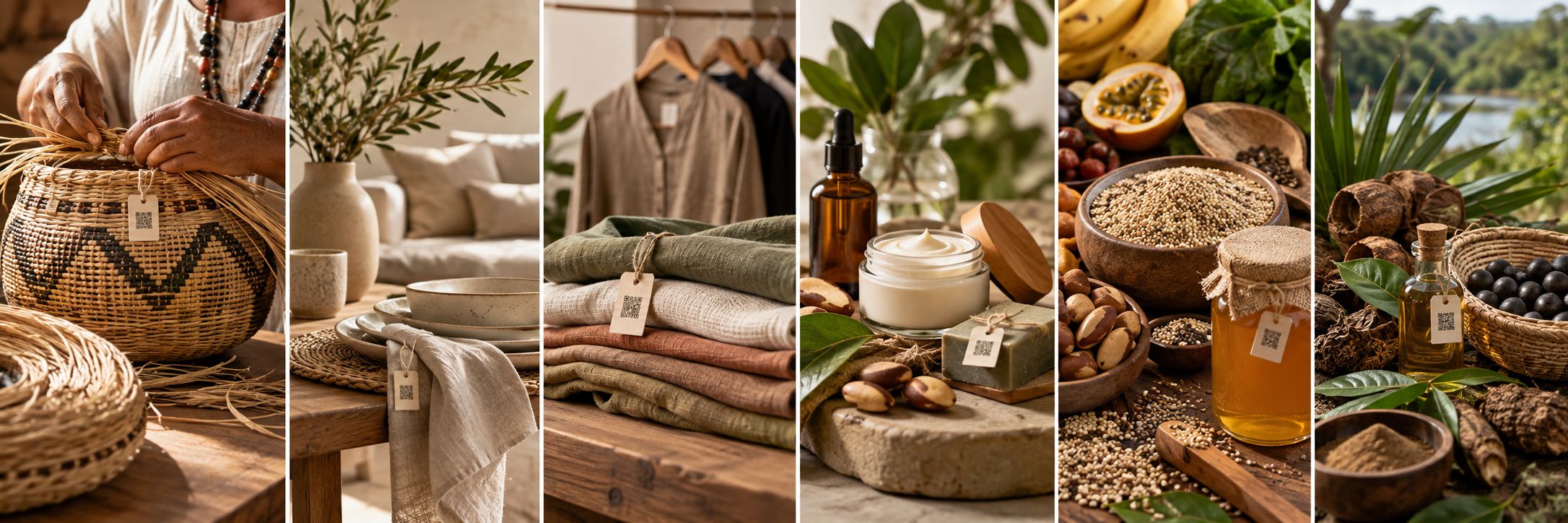
Traceability for Different Sectors and Supply Chains
Each industry has its own supply chain, but many face the same challenges: verifying origin, organizing production data, connecting with suppliers, tracking materials, documents, and batches, and transforming scattered information into market intelligence.
SUIDChain links the physical product to its digital identity through SUID and SUIDPass, bringing together data on origin, authorship, territory, materials, processes, documents, traceability, and commercial presence.
The platform can be applied to various sectors, such as handicrafts, original art and design, home and decor, fashion, jewelry and bio-jewelry, natural cosmetics, locally sourced foods, natural ingredients, the bioeconomy, and socio-biodiversity.
Each business can structure its traceability system according to its specific circumstances, laying the groundwork for greater transparency, competitive differentiation, export readiness, and market intelligence.
Different industries, different supply chains. One common need: to transform sources, data, and evidence into value for the market.
Key Sectors

Fashion & Textiles
Connect fibers, fabrics, suppliers, processes, and collections into a digital identity designed for transparency and the marketplace.

Home & Decor
Track materials, suppliers, production, and lots, linking each product to its origin, documentation, and supply chain history.
Natural Cosmetics
Link ingredients, suppliers, batches, geographic regions, and documentation to enhance transparency and traceability throughout the supply chain.
Natural Products & Ingredients
Track oils, extracts, fibers, seeds, and other raw materials from their source through processing to commercial use.

Agriculture & Regenerative Production
Connect producers, crops, inputs, lots, and production practices, increasing transparency from the point of origin to the market.
12 Other Industries That Can Use SUIDChain
Art & Original Creation
Record the artwork’s authorship, technique, materials, and history in a digital identity that reinforces its documentation, provenance, and value.
Jewelry
Link the artist, metals, gemstones, suppliers, and documents to the piece's digital identity, thereby reinforcing its provenance and value.

Organic Jewelry
Document seeds, fibers, natural materials, artisans, and regions, highlighting the biodiversity, craftsmanship, and origin of each piece.
Fashion Accessories
Organize materials, suppliers, production, and the origin of handbags, belts, hats, and accessories into a traceable supply chain.
Healthy Eating
Track ingredients, producers, batches, processing, and origin, thereby enhancing transparency, differentiation, and market value.
Fitness & Wellness
Connect products, materials, suppliers, accessories, and evidence across supply chains focused on fitness, health, and wellness.

Bioeconomy & Sociobiodiversity
Connect biodiversity, territories, communities, raw materials, and evidence, strengthening origin, impact, and market access.

Forests, Timber, and Forest Products
Link species, territory, origin, suppliers, lots, and documents, thereby strengthening traceability and supporting documentation along the forest supply chain.

Bioenergy & Biofuels
Organize information on biomass sources, suppliers, batches, processing, and documentation within renewable energy supply chains.
Biotechnology & Bio-inputs
Link biological sources, production, lots, suppliers, and documents in bio-input chains and biotechnology solutions.

Green Chemistry & Bioproducts
Track renewable raw materials, processes, batches, and records for chemicals, materials, and bioproducts with a lower environmental impact.

Circular Economy & Recycled Materials
Track the origin, recovery, recycling, and transformation of materials, linking materials and evidence throughout new production cycles.
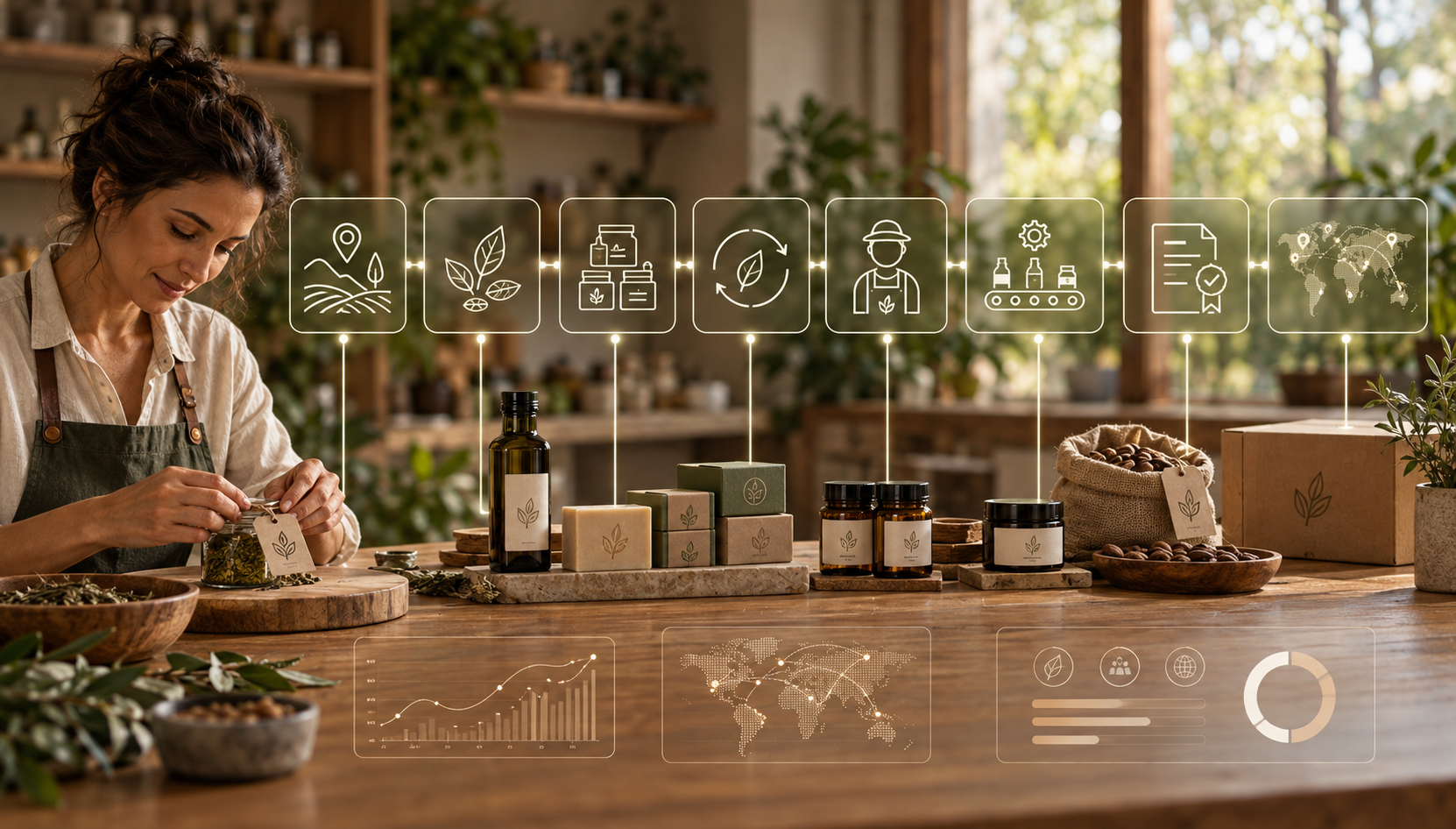
What Can Be Tracked in Any Industry
How SUIDChain Adapts to Different Operations
Each operation has different levels of complexity, volume, and traceability requirements. SUIDChain can start with a single product and evolve to include batches, collections, organizations, or entire supply chains, connecting origin, production, documents, evidence, and market presence in a structured and adaptable way.
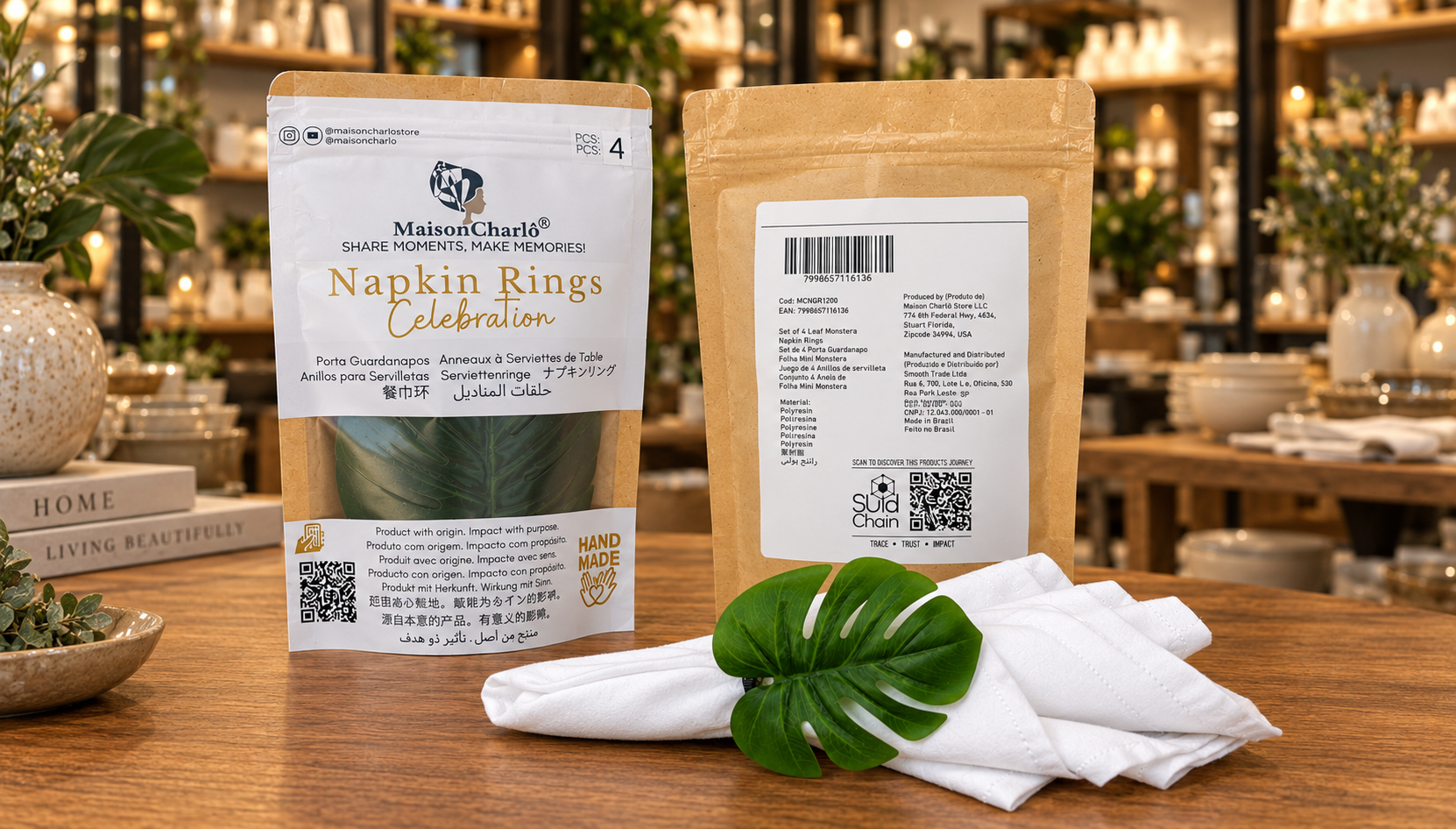
Real-world application | Maison Charlô
Maison Charlô combines contemporary design, Brazilian craftsmanship, and purpose. With SUIDChain, its pieces gain a digital identity, greater transparency, and added value at every stage of their journey.
- Tracks the origin and artisanal craftsmanship
- Connects each piece to its history and region
- Builds trust and opens up new market opportunities
Frequently Asked Questions
The frequently asked questions help you understand how SUIDChain can be applied across different industries, product types, and levels of complexity. Here you’ll find answers regarding traceability, SUIDPass, certifications, exports, and how the platform can be tailored to the needs of each operation.
1. Can SUIDChain be used in different industries?
Yes. The platform can be applied to various supply chains, such as handicrafts, fashion, home decor, jewelry, natural cosmetics, food, the bioeconomy, agriculture, biotechnology, wood, and the circular economy.
2. How does SUIDChain differ from one sector to another?
It mainly changes the type of data being tracked. In fashion, this could include fibers and suppliers; in bio-jewelry, materials and region; in food, ingredients, lots, and origin; and in art, authorship and provenance.
3. Do I need to have a complex supply chain to use SUIDChain?
No. The operation can start with just one product and evolve to include batches, collections, organizations, or entire production chains.
4. Does SUIDChain support handmade and original products?
Yes. The system can record the piece’s authorship, technique, origin, materials, production process, documentation, and history, thereby contributing to its value and helping it stand out in the marketplace.
5. Can SUIDChain also be used by industries and B2B operations?
Yes. Sectors such as bio-inputs, green chemistry, biofuels, natural ingredients, wood, and recycled materials can organize raw materials, suppliers, batches, processes, and documents.
6. How does SUIDPass work in different sectors?
SUIDPass links the physical product to its digital identity via a QR code, allowing access to selected information about its origin, materials, production, documents, evidence, and history.
7. Does SUIDChain replace mandatory certifications or registrations?
No. Certifications, analyses, licenses, and regulatory registrations continue to be issued by the responsible entities. SUIDChain organizes and links this evidence to the product’s digital identity.
8. Can SUIDChain help reduce the risk of greenwashing?
Yes, by allowing claims regarding origin, sustainability, impact, or recycled content to be linked to documents, data, and evidence from the supply chain.
9. Can SUIDChain be used for products intended for export?
Yes. The platform helps organize information on origin, production, materials, documents, commercial identification, and market presence, supporting preparation for international markets.
10. My company operates in more than one industry. Can I use SUIDChain for the same operation?
Yes. A company may have products and supply chains in different categories and organize each traceability journey according to their characteristics.
11. Can cooperatives, associations, and local projects also use SUIDChain?
Yes. The platform can organize producers, communities, raw materials, products, batches, documents, and territories within a single traceability framework.
12. I didn't find my sector on the list. Can SUIDChain still be applied?
Possibly. The 18 sectors presented represent priority applications, but other supply chains can be evaluated based on their products, data, traceability needs, and market objectives.