Mercosur and the European Union: When Origin, Evidence, and Traceability Become Part of the Internationalization Strategy
The trade rapprochement between Mercosur and the European Union marks a new phase for companies seeking to expand their international presence. But to reduce this transformation to a mere reduction in tariffs would be to see only part of the picture that is beginning to take shape.
The EU–Mercosur Interim Trade Agreement has been provisionally applied since May 1, 2026, and establishes new conditions for trade in goods and services between the two blocs. At the same time, it highlights issues such as SMEs, technical standards, sustainability, and greater predictability in trade relations.
For Brazilian companies, this means looking beyond the traditional question: “How can I export to Europe?” The issue also involves understanding whether the company can organize information, demonstrate origin, understand its supply chain, and back up its claims about its products with evidence.
Contemporary internationalization begins long before the border. It involves products, markets, and logistics, but also information. In increasingly interconnected supply chains, knowing what was produced, where, how, with what materials, and by whom can take on commercial and regulatory significance.
Sustainability must be guided by evidence
For years, terms such as “sustainable product,” “responsible production,” “handcrafted,” and “conscious sourcing” have become increasingly common in corporate communications. These are important attributes, but marketing claims must be increasingly backed by information that supports them.
When a company claims to know the origin of its product, a second question arises: How is that origin documented? When a company makes a specific environmental or social claim, it is important to identify which data, documents, processes, or certifications are related to that claim.
This does not mean that all products exported to the European Union will require the same certification or the same level of traceability. Requirements vary depending on the category, raw materials, applicable legislation, supply chain, and market. Generalizing requirements can lead companies to make the wrong decisions.
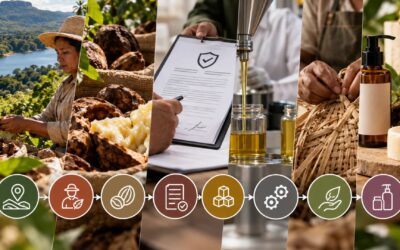
What changes is the strategic importance of the information. Source, suppliers, materials, processes, documents, batches, and evidence are no longer data scattered across spreadsheets, files, and people; instead, they form a layer of knowledge about the product itself.
For small and medium-sized businesses, this shift can pose an additional challenge. Large organizations typically have dedicated compliance, sustainability, and international trade teams. A small brand, cooperative, producer, or artisan is unlikely to have the same administrative structure.
That is precisely why organizing evidence before it is required can give you an advantage. Being prepared reduces the need to hastily piece together information when a buyer, an audit, a certification, or a new international opportunity arises.
Traceability is not the same as certification—but the two can go hand in hand
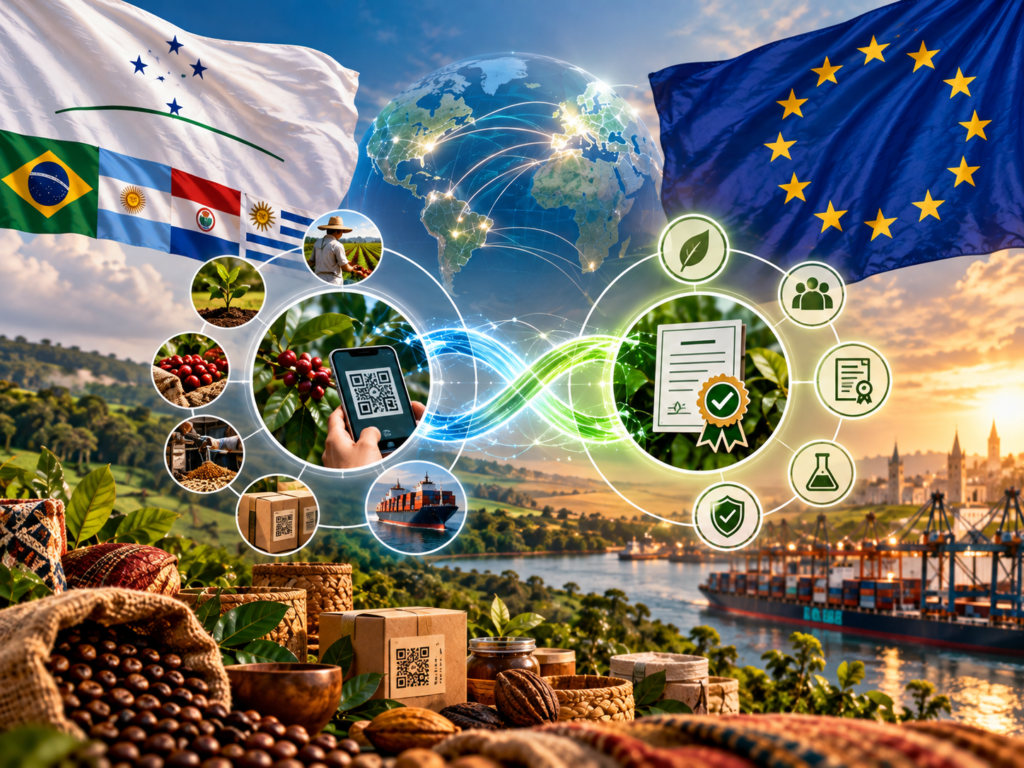
One of the most common misconceptions is treating traceability and certification as if they were the same thing. They are not. Certification verifies compliance with criteria defined by a specific standard. Traceability tracks and links information about products, origins, processes, materials, or movements throughout the supply chain.
It is also important to distinguish between traceability and regulatory compliance. A technological system does not automatically make a product compliant, just as having data on a supply chain does not replace audits, certification bodies, mandatory declarations, or competent authorities.
The value of traceability lies elsewhere: it can help structure the flow of information. Instead of relying on fragmented data, it becomes possible to link products, batches, producers, regions, raw materials, processes, and documents within an organized framework.
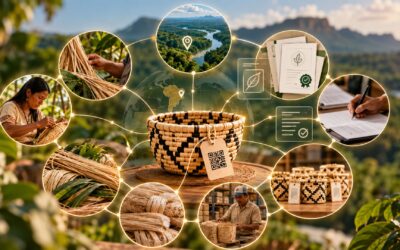
This concept gains traction when we consider supply chains made up of small-scale producers, artisans, cooperatives, bioeconomy businesses, and companies in the creative economy. Often, a product’s value lies precisely in characteristics that are unlikely to appear on a conventional barcode.
There is craftsmanship. There is a region of origin. There is technique. There is traditional or artisanal knowledge. There are specific materials and different stages of production. Transforming these elements into structured information allows the product’s history to be supported by evidence.
It is in this area that SUIDChain works with the concept of digital product identity. The technology is not intended to replace certifications or compliance bodies, but rather to organize data and evidence that can accompany the product and support its various needs throughout its lifecycle.
The creative economy and technology can grow together
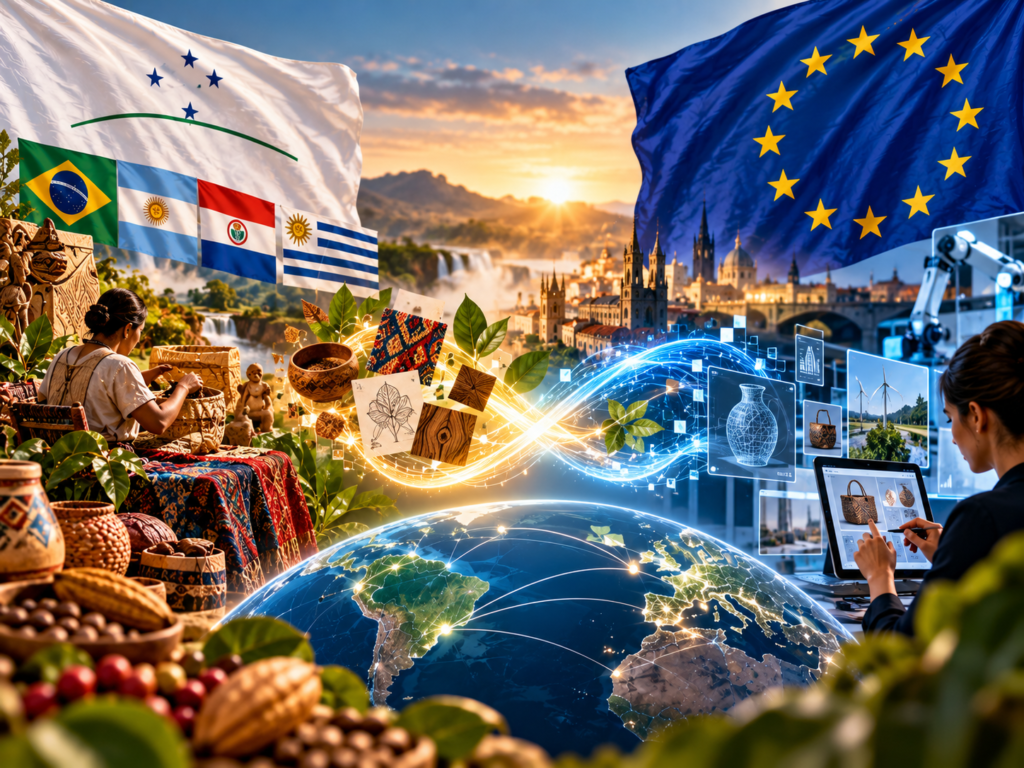
The relationship between the creative economy and technology deserves special attention in this new business environment. Handicrafts, design, fashion, home decor, locally sourced foods, regional products, and the bioeconomy embody values that go beyond the physical functionality of the product.
For a long time, technology and artisanal production were viewed as polar opposites. On one side were people, the local environment, and craftsmanship; on the other, systems, automation, and data. This dichotomy loses its meaning when technology is used to preserve and demonstrate value.
A QR code linked to a digital identity, for example, can unlock a wealth of information that would not physically fit on a label. Origin, materials, authorship, territory, documents, production process, and other evidence can remain associated with that product’s identity.
In this context, technology does not need to replace the story. It can provide structure to the story. For products whose unique selling point lies precisely in their origin, in the craftsmanship, or in the knowledge of a particular community, this capability can become especially relevant.
This also changes the way we think about competitiveness. Small Brazilian businesses are unlikely to compete globally based solely on scale or lower prices. Many have other sources of value: biodiversity, creativity, design, geography, culture, knowledge, and the ability to produce in unique ways.
The challenge is to transform these attributes into value that the market can recognize. When the creative economy, technology, and traceability work together, a product can become more than just a commercial item; it can carry with it a structured layer of identity and information.
The agreement opens doors. It remains the company's responsibility to be prepared.
The Mercosur–European Union agreement could expand opportunities, reduce certain barriers, and make some trade flows more predictable. However, no agreement automatically eliminates market requirements, logistics, documentation, rules of origin, or requirements applicable to specific categories.
Therefore, companies interested in the European market will need to avoid generic solutions. The analysis must begin with the product: classification, composition, raw materials, origin, target market, technical requirements, documentation, logistics, and any necessary or commercially relevant certifications.
In this scenario, traceability is no longer just an operational tool; it can take on a strategic role. The better a company understands its own supply chain, the greater its ability to respond to buyers, organize documents, identify risks, and demonstrate product attributes.
For SMEs, there is also an important opportunity. The agreement itself focuses on small and medium-sized enterprises, precisely because administrative costs, access to information, and the complexity of international trade place a proportionally greater burden on smaller organizations.
The future of internationalization, therefore, will not be shaped solely by those who are able to produce. It will also be shaped by companies capable of understanding, organizing, and showcasing what they produce, linking physical products to a reliable layer of information.
Mercosur and the European Union may be building a new trade bridge. To cross it, however, companies will need to bring more than just products. They will need to bring their origins, identity, information, evidence, and adaptability.
It is precisely in this transformation that product traceability and digital identity take on new meaning—not as a seal or promise of compliance, but as an infrastructure capable of linking different pieces of information and making supply chains more transparent.
For SUIDChain, this is a discussion that goes far beyond technology. It’s about preparing products and companies for a market in which what is claimed about origin, territory, materials, processes, and impact will need to align more and more closely with what can be demonstrated.
In the evolving landscape of international trade, telling the story will continue to be important. The next step may be to link that story to the evidence.